




You’ve probably heard that homeowners today are sitting on record amounts of home equity. But what does that actually mean for you?
Simply put, your home equity isn’t just a number on paper — it’s a powerful financial asset that can help you move, remodel, invest, or protect your future.
Let’s break down how home equity works and the smartest ways to use it in today’s market.
What Is Home Equity?
Home equity is the portion of your home that you own outright. It grows in two ways:
- As you pay down your mortgage balance
- As home values increase over time
The difference between your home’s current market value and what you still owe on your loan equals your equity.
How Much Equity Does the Average Homeowner Have?
Recent housing data shows that American homeowners are in a strong financial position:
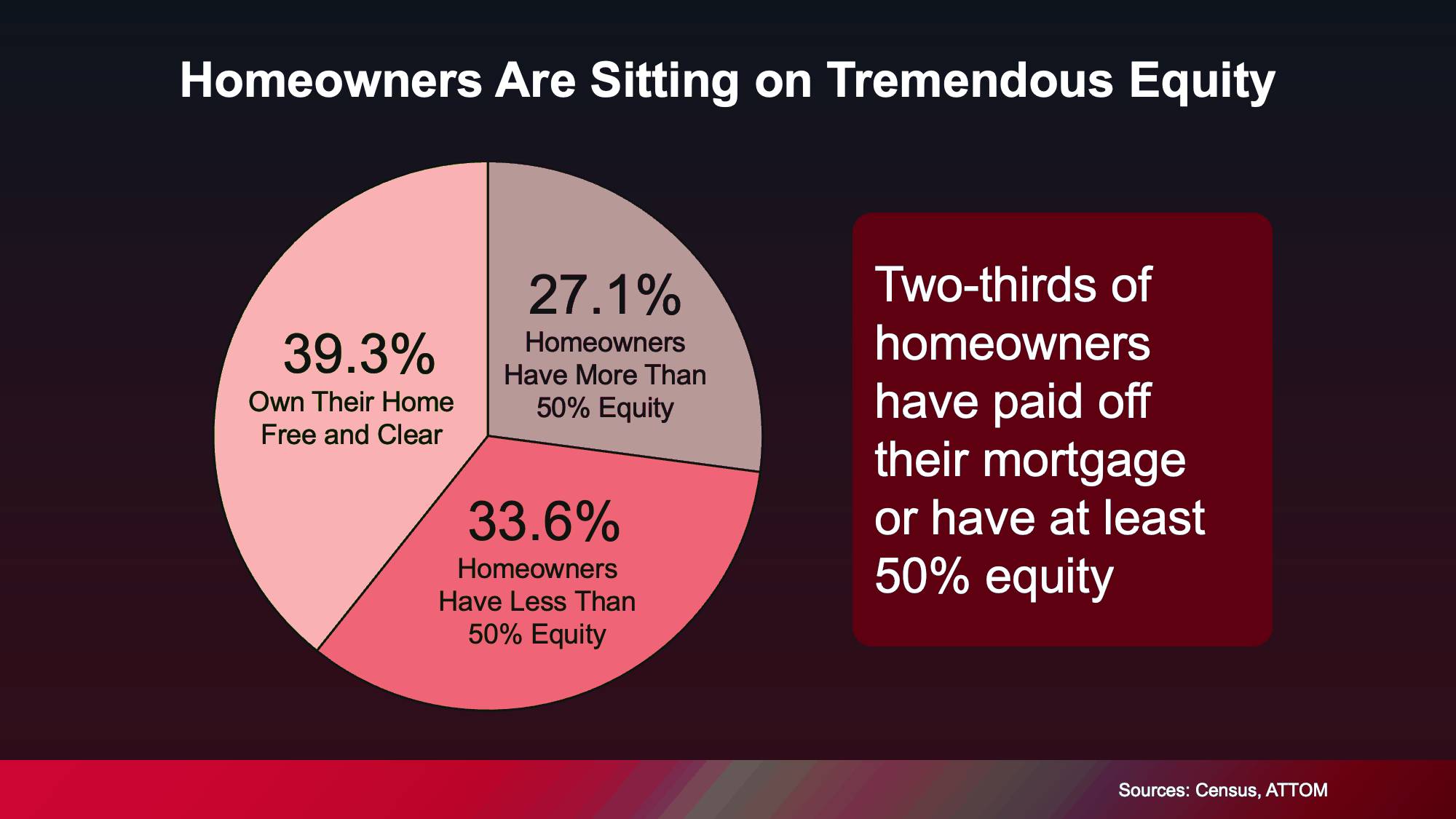
- 39% of homeowners own their homes free and clear
- 27% have at least 50% equity
- The typical homeowner has nearly $300,000 in equity
That’s six figures in potential financial leverage.
Whether you have $100,000, $300,000, or more, your equity can open real opportunities.
4 Ways to Use Your Home Equity
1. Move Into a Home That Fits Your Life Today
Life changes. Maybe your home feels too small. Maybe it’s too big now that the kids are gone.
Your equity can be used as:
- A substantial down payment on your next home
- A way to lower your new mortgage payment
- Even a full cash purchase in some cases
If you’ve been waiting to “upgrade” or “right-size,” your equity could make that move possible.
2. Renovate or Upgrade Your Current Home
Not ready to move? You can reinvest your home equity into improvements that increase property value.
High-ROI projects often include:
- Kitchen updates
- Bathroom remodels
- Energy-efficient upgrades
- Exterior enhancements
Before starting renovations, consult with a local real estate expert to prioritize improvements that will generate the strongest return when you sell.
3. Fund Major Life Goals
Home equity can serve as a strategic financial tool beyond housing.
Homeowners are using equity to:
- Start or expand a business
- Fund retirement planning
- Pay for college tuition
- Help family members with a down payment
- Consolidate higher-interest debt
When used wisely, equity can create long-term financial flexibility.
4. Protect Yourself During Financial Hardship
If you’re facing financial challenges, your equity may prevent foreclosure.
Instead of losing your home, you may be able to:
- Sell and walk away with cash
- Pay off debts
- Reset financially
Equity provides options — and options create security.
How to Access Your Home Equity Safely
Before tapping into your equity, take these smart steps:
Step 1: Get a Professional Equity Assessment
A local real estate expert can determine your home’s current market value and calculate your true available equity.
Step 2: Speak With a Financial Advisor
Understand the tax implications, loan-to-value ratio (LTV), and long-term impact before making decisions.
Important Rule of Thumb:
Most financial experts recommend maintaining at least 20% equity in your home as a safety cushion. This helps protect you during market shifts and ensures strong loan positioning.
Currently, most homeowners exceed this benchmark, with trillions in tappable equity available nationwide.
Why Home Equity Matters More Than Ever in 2026
With rising home values over the past several years, homeowners are in one of the strongest equity positions in history. This creates opportunities to:
- Build generational wealth
- Reposition housing strategy
- Increase financial leverage
- Improve lifestyle flexibility
Your home isn’t just where you live — it’s one of your largest wealth-building tools.
Bottom Line
Your home equity is likely one of your most valuable financial assets.
Whether you’re considering moving, remodeling, investing, or securing your financial future, understanding your equity position is the first step.
Start by getting a professional home value assessment and speaking with a financial advisor to explore your best options.
If you had immediate access to your home equity, what goal would you pursue first?
Check out this article next