


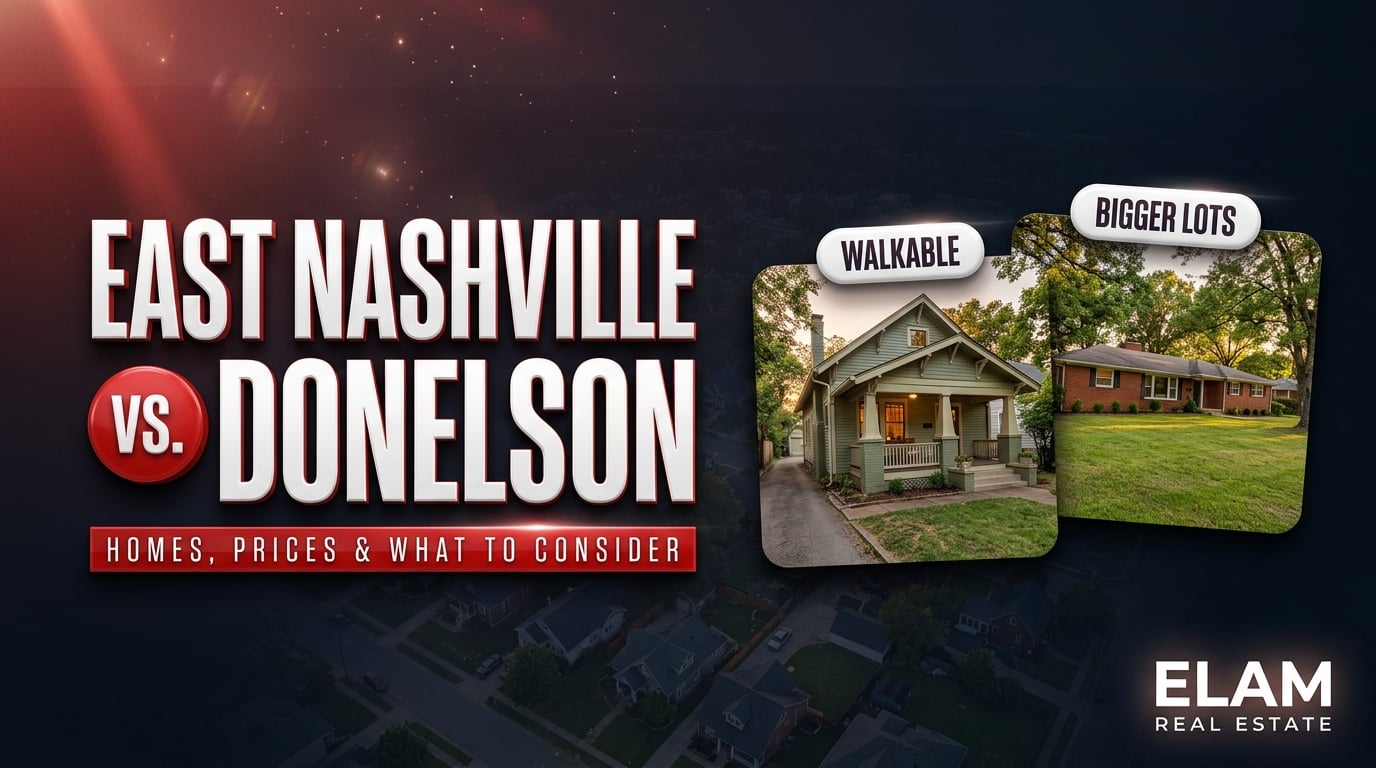
East Nashville and Donelson both sit on the east side of the Cumberland River, both offer a mix of older homes and newer construction, and both come up often when buyers are looking for something closer-in than the suburbs. Beyond that, they are very different places to buy. This guide compares them on price, housing types, lot sizes, walkability, access, and inspection considerations so you can see which one lines up with your budget and priorities.
THE REAL PICK
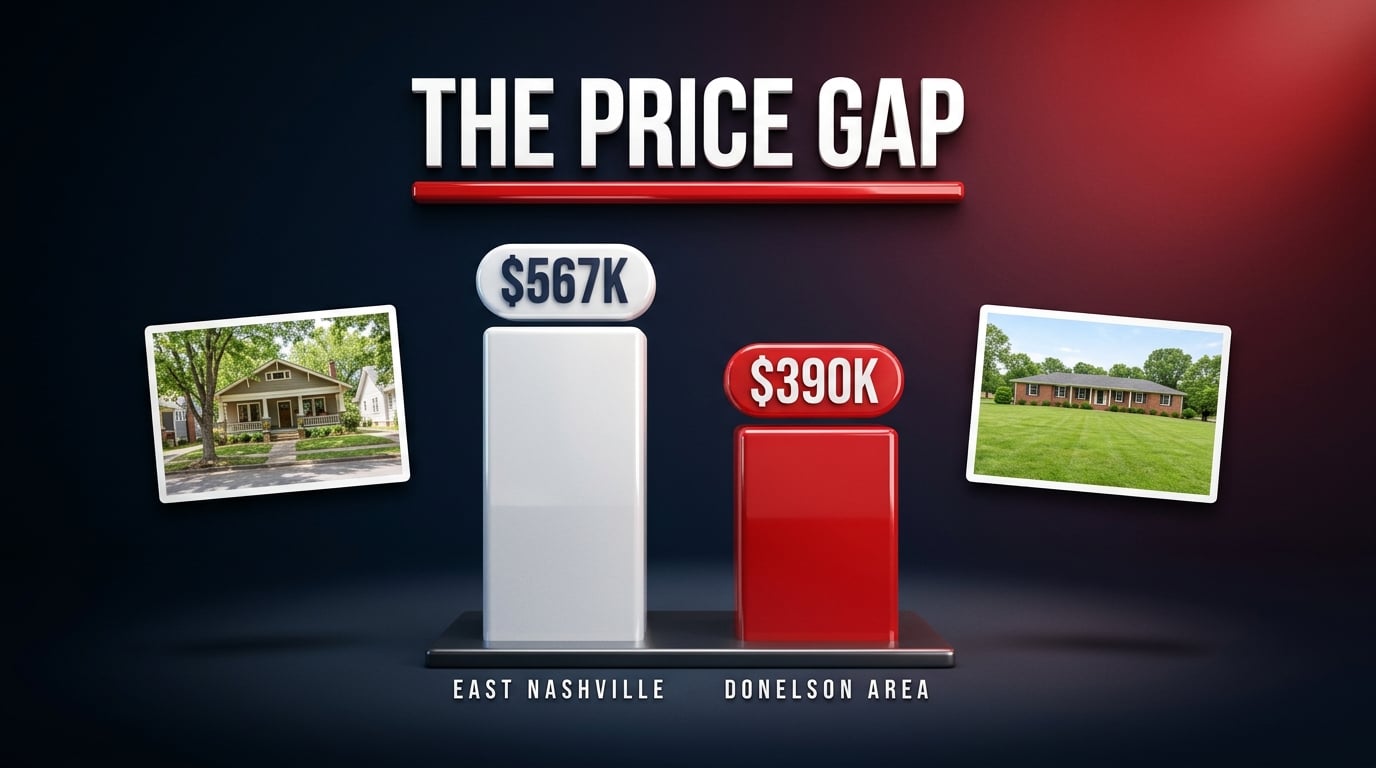
East Nashville (ZIP codes 37206 and 37216) is closer to downtown, more walkable, and priced higher, with a RealTracs median sale price of $567,000 for the quarter ending June 2026. The Donelson area, by comparison, posted a median near $390,000 to $420,000. East Nashville means smaller lots, Craftsman bungalows, and heavy infill. Donelson means mid-century brick ranches on larger lots, quicker airport access, and a more car-oriented layout.
How Do Prices Compare Between East Nashville and Donelson?
According to RealTracs data reported by Greater Nashville REALTORS, East Nashville's median sale price was $567,000 for the quarter ending June 2026, down 5.5% from a year earlier even as sales volume rose roughly 15%. The Donelson, Hermitage, and Old Hickory corridor, which RealTracs tracks together, posted a median of $390,000, essentially flat year over year. For ZIP code 37214 specifically, RealTracs-based reporting from March 2026 showed a median sold price of about $420,000.
East Nashville is not one price point, though. Local market reporting from early 2026 put the median home value in 37206, the historic core around Five Points, at about $631,000, down 3.7% over the prior 12 months, with the most active band between $400,000 and $600,000. The northern 37216 ZIP code, which includes Inglewood, had a median sale price of about $566,000 in February 2026 according to Redfin data cited by a local guide. Within 37206, neighborhood estimates reported by a local brokerage run roughly $320,000 to $500,000 in Cleveland Park and Greenwood, $380,000 to $580,000 in Shelby Hills, $400,000 to $650,000 in Rosebank, $500,000 to $750,000 or more around Five Points, and $700,000 to over $1 million in Historic Edgefield.
Both areas currently sit within a Nashville market that Redfin's August 2026 data ranks as the strongest buyer's market in the country, with an estimated 139% more sellers than buyers. In East Nashville, median days on market in 37206 was about 62 in early 2026, with homes selling at roughly 99% of list price, which suggests well-priced homes are still moving. For more on that shift, see our post on Nashville's #1 buyer's market ranking.
What Can a Comparable Budget Buy in Each Area?
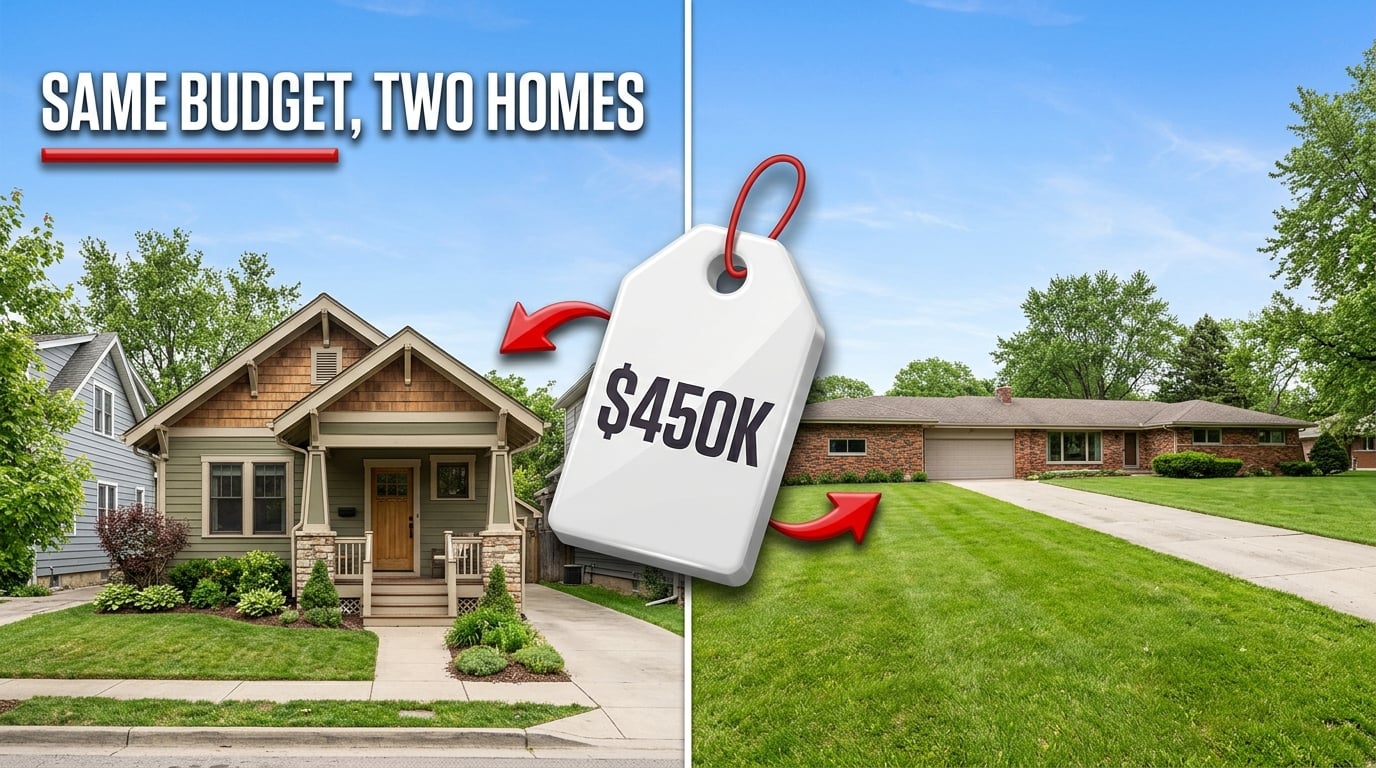
At around $450,000, East Nashville buyers are typically looking at an entry-level Craftsman bungalow or cottage, often under 1,200 square feet, in pockets such as Rosebank, Shelby Hills, or the 37216 side. Local reporting puts typical entry-range pricing at $300 to $350 per square foot, which works out to roughly 1,300 to 1,500 square feet at this budget. Tall-skinny detached homes and townhome-style infill in the 37216 ZIP code have also been listed in the mid-$400,000s to low-$500,000s. In Donelson, the same budget sits in the middle of the area's core price tier, which commonly buys a detached mid-century brick ranch on a lot of a third of an acre to a half acre.
At around $700,000, East Nashville buyers can reach renovated bungalows in Rosebank and around Five Points, smaller new infill homes, and some homes in Lockeland Springs at the lower end of its range. In Donelson, $700,000 sits in the upper tier, where buyers generally find substantially renovated homes, larger lots, and newer custom builds. In general, a given budget buys more land and, in many cases, more square footage in Donelson, while the same budget in East Nashville buys a more central location and a walkable setting.
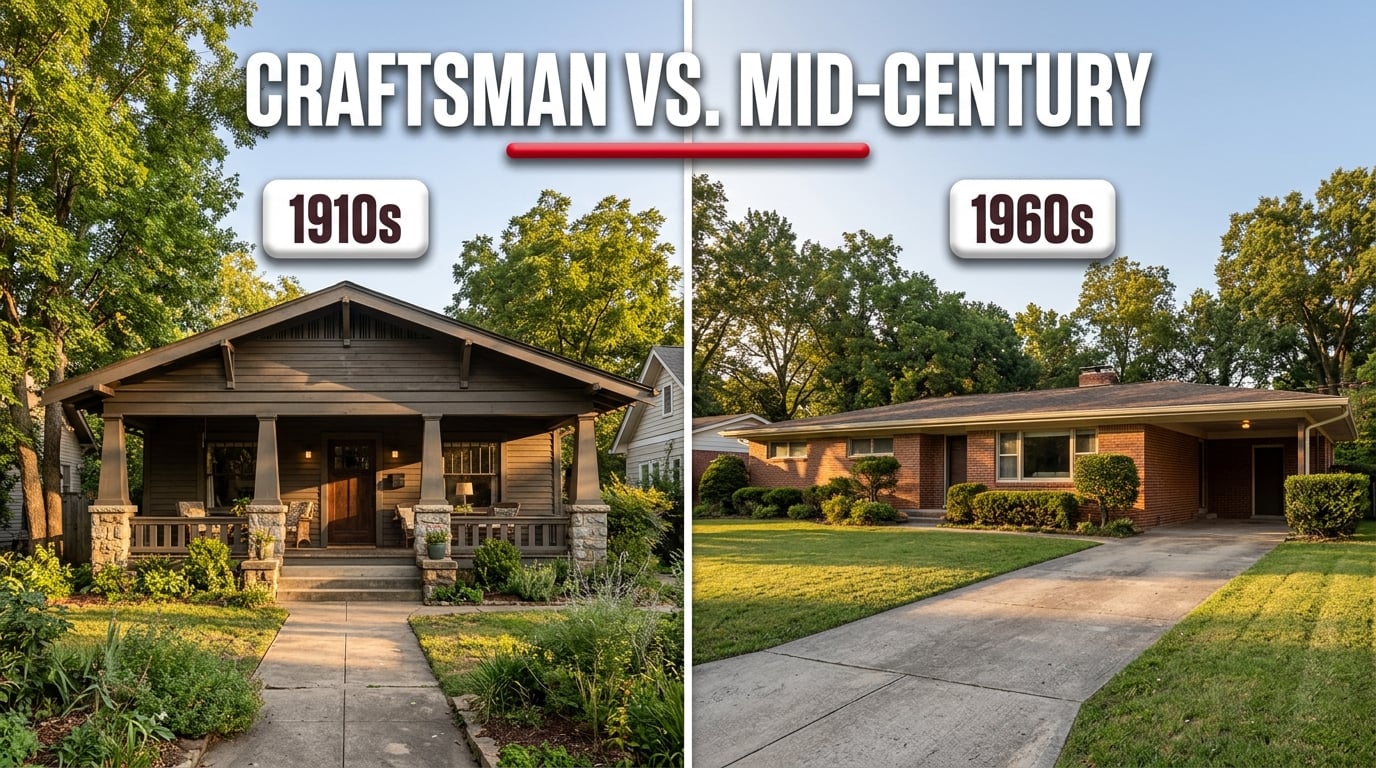
Older Homes vs. Renovated Homes: What Should Buyers Expect?
East Nashville's core is dominated by early 20th-century housing. In Five Points and Lockeland Springs, homes are predominantly 1910s through 1930s Craftsman bungalows, with Victorian and Italianate homes in Historic Edgefield, which was platted in the 1870s. In Lockeland Springs, the 1910s and 1920s account for roughly 36% of single-family transactions, with typical lots around 50 by 150 feet. Many of these homes have been updated, and some are original, so condition varies widely from house to house. The 37216 side leans mid-century, with brick ranches from the 1960s and 1970s on larger, leafier lots.
Donelson's housing stock is mostly mid-century as well, with brick ranches and minimal traditional homes from the 1950s through 1970s, some 1980s and 1990s homes, and newer infill scattered throughout. Neighborhoods such as Bluefields include stone cottages and 1950s brick ranches, and prices vary depending on whether a home is original or fully renovated.
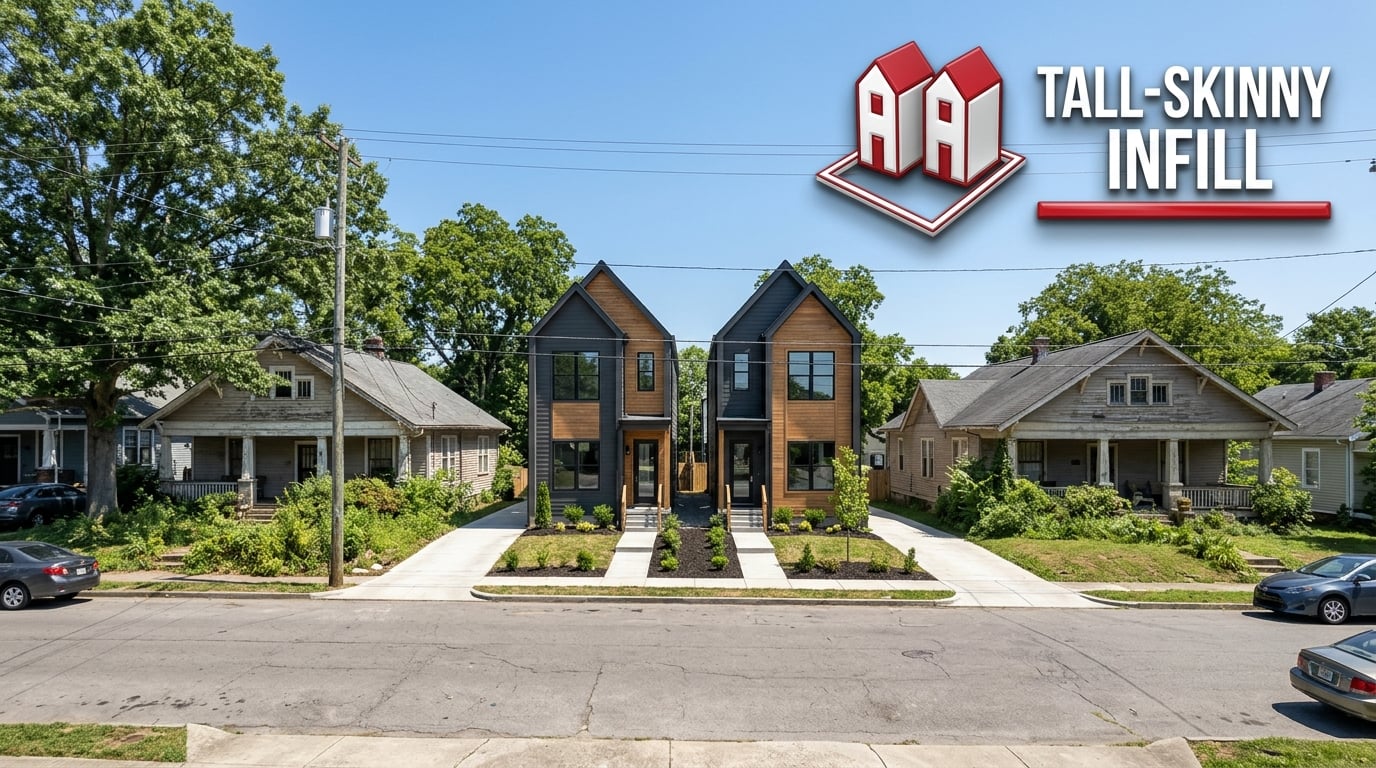
What About Infill Construction?
Infill is a much larger part of the East Nashville market than the Donelson market. Local market data shows East Nashville new construction in 37206 had a median sale price of about $899,000 in the first quarter of 2026, with an average size of roughly 2,540 square feet, while new construction in 37216 had a median of about $530,000 and averaged around 1,650 square feet. Price per square foot was similar, at about $354 versus $340, so the difference is mostly size and location. Infill takes several forms, including detached single-family homes, townhomes, and the so-called tall-skinny format, where two detached homes share a subdivided lot. In one 37216 infill district known as East Hill, that format accounted for nearly half of closings over a recent 12-month period.
Donelson has newer construction too, but it is mostly scattered infill, townhome projects near Lebanon Pike, and some move-in-ready new builds rather than large concentrations of infill. Buyers considering any new infill, in either area, should still get an independent inspection, since new construction can have drainage, flashing, and finish issues of its own.
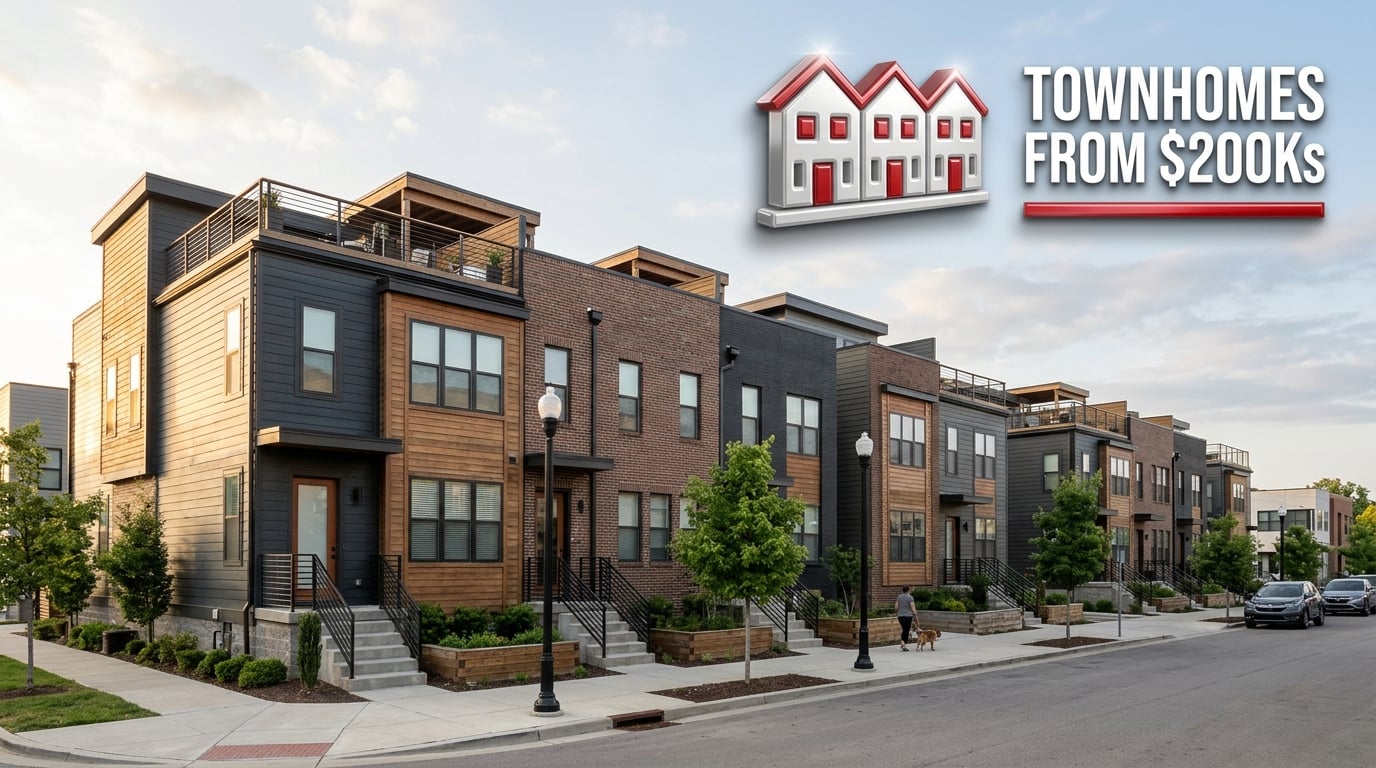
Condos and Townhomes
East Nashville has a deep attached market. In 37206, local reporting put the median for attached homes around $550,000 at roughly $346 per square foot, with condo pricing near Five Points running from about $315,000 to $665,000. In 37216, entry-level attached options have been listed well below $300,000 in some buildings. Only about 11% of 37206 sales were under $400,000, so entry-level choices are limited in the historic core.
In Donelson, townhomes start in the low $200,000s, and townhome and infill communities near Lebanon Pike generally fall between about $250,000 and $450,000. For buyers who want a lower entry price and less maintenance, Donelson's attached market is generally the more affordable of the two.
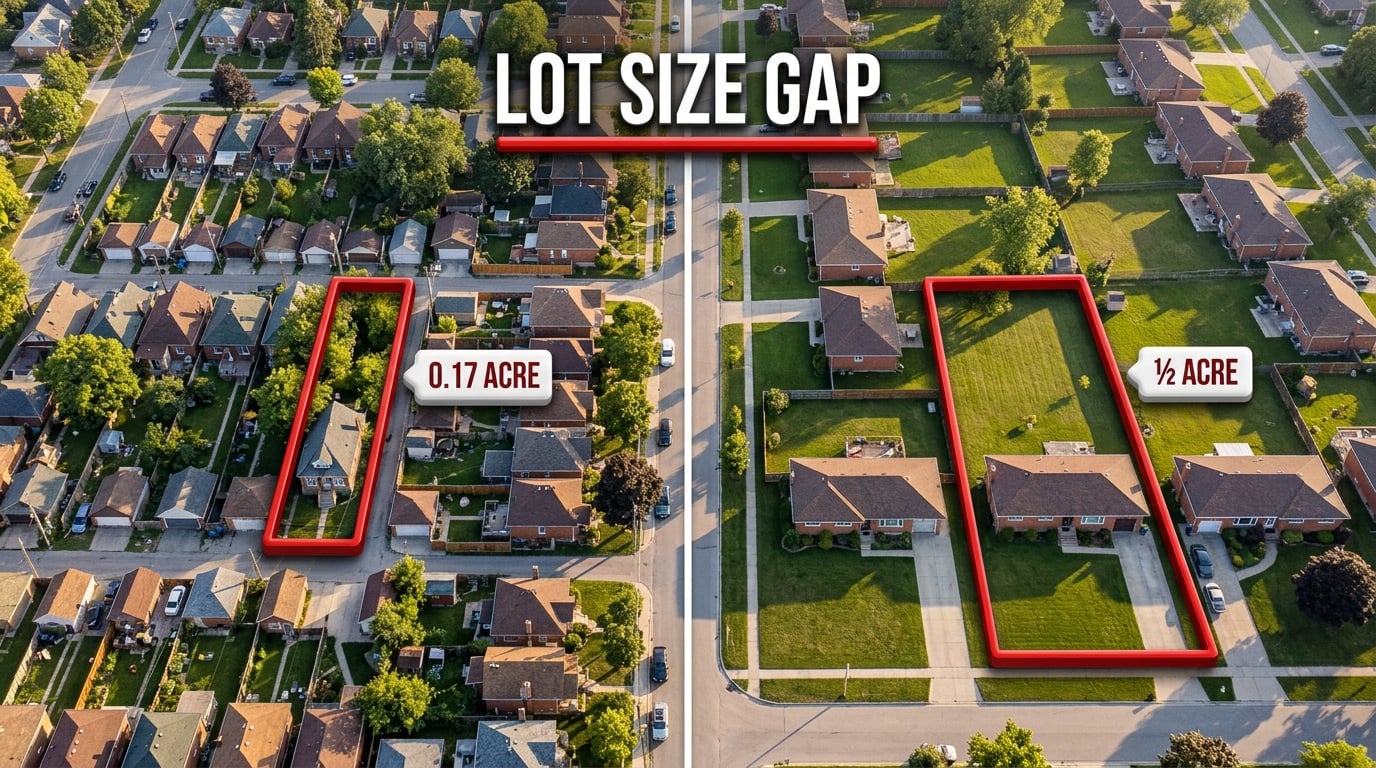
How Do Lot Sizes Compare?
Lot size is one of the clearest differences. Typical Lockeland Springs lots run about 50 feet wide and 150 feet deep, roughly 0.17 acre, and infill lots are often smaller. In East Hill, the median single-family lot is about 0.22 acre. Some 37206 listings reach about a third of an acre, but it is not the norm in the core. Inglewood and parts of Shelby Hills on the 37216 side tend to have larger lots than the historic core.
Donelson listings have ranged from about a third of an acre to well over an acre, with many established homes sitting on lots close to half an acre. Buyers who want yard space, outbuilding potential, or room to expand generally find more of it in Donelson at comparable prices.
Which Area Is More Walkable, and What Amenities Are Nearby?
East Nashville is among the more walkable residential areas in Nashville. Five Points, centered where Woodland, Clearview, and Chapel converge, has restaurants, coffee shops, and retail within a few blocks of nearby homes, and the Porter Road corridor in Rosebank has a similar mix. Shelby Park, with its tennis courts, ballfields, and dog park, and the roughly 600-acre Shelby Bottoms Greenway along the Cumberland River are major outdoor amenities, and the area hosts events such as the Tomato Art Festival each August. Walkability varies by pocket. Interior streets are generally more walkable than areas near the eastern industrial corridor or Gallatin Pike.
Donelson is more car-oriented, with shopping and dining spread along Lebanon Pike and McGavock Pike. Its main amenities are Two Rivers Park, a 374-acre Metro park with a golf course, skate park, disc golf, and dog park, the Stones River Greenway, Opry Mills and the Grand Ole Opry area, and the Friday Donelson Farmers Market. Percy Priest Lake is also a short drive.

How Does Access to Downtown and the Airport Compare?
East Nashville is closer to downtown. Historic Edgefield and the western edge are about 5 to 7 minutes from downtown by car, Five Points and Lockeland Springs run roughly 8 to 12 minutes, and the eastern edges near Shelby Hills and Barclay Drive run about 12 to 18 minutes. BNA is typically 12 to 18 minutes from most of East Nashville.
Donelson is typically 10 to 15 minutes from downtown and 5 to 8 minutes from the airport, making it the faster of the two for airport trips. Donelson also has a Music City Star commuter rail stop with service to downtown. Both areas depend on I-40, and Donelson also uses Briley Parkway, Lebanon Pike, and McGavock Pike. Commute times vary significantly by time of day.

What Should Buyers Know About HOAs?
Most older detached homes in both areas do not have an HOA. The picture is different for newer product. Planned infill communities, townhomes, condo buildings, and some tall-skinny developments in East Nashville are more likely to have HOA or condo fees, and the same is true of townhome communities and newer infill in Donelson. HOA status and fees vary property by property, so confirm them before making an offer.
What Should Buyers Inspect Carefully in Older Homes?
Both areas contain a lot of older housing, and the right inspection plan depends on the age of the home. East Nashville's 1910s through 1930s homes and Donelson's 1950s through 1970s homes tend to have different concerns.
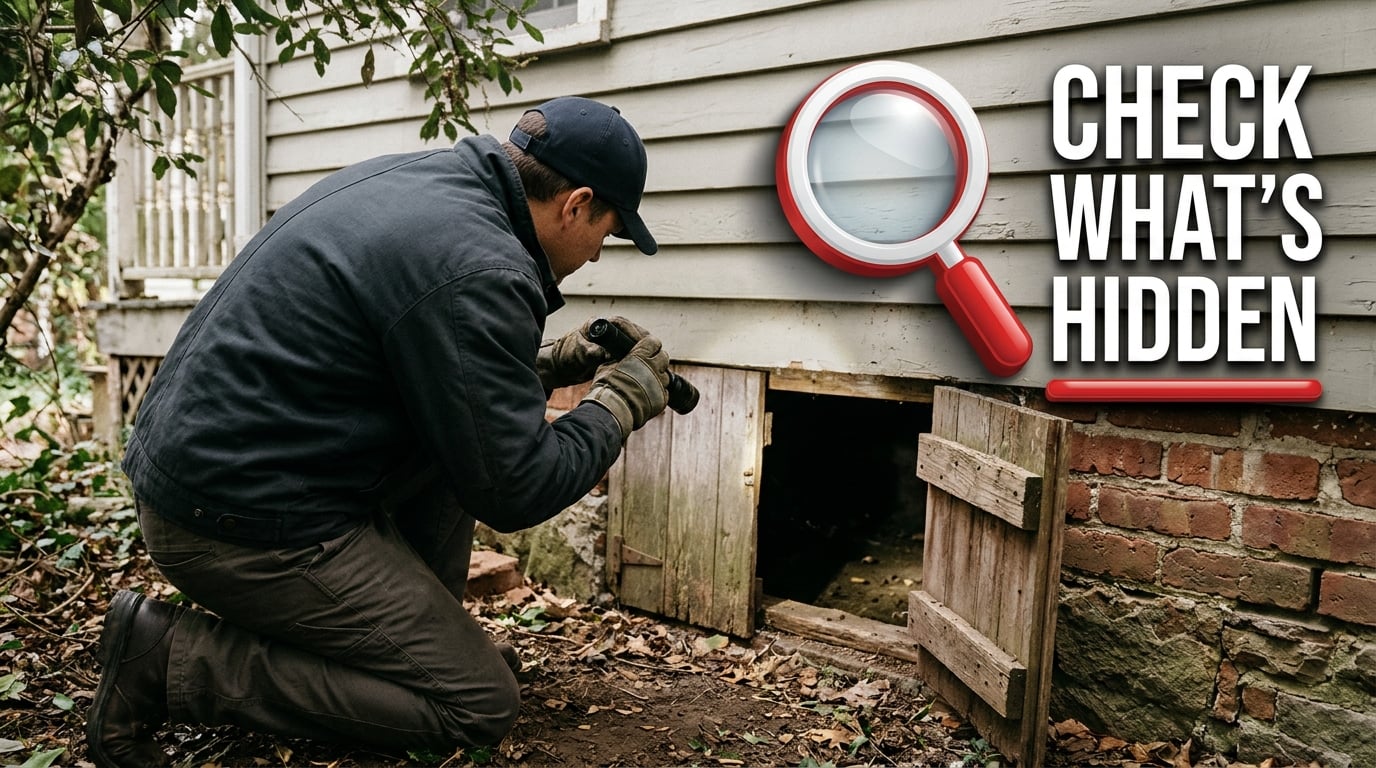
Crawl spaces and moisture are a defining local issue. Many Nashville homes sit over vented crawl spaces, and the region's humidity makes them a frequent source of moisture and mold problems. Foundation condition should also be reviewed, and a foundation specialist is worth consulting if an inspector flags concerns.
Electrical systems depend on age. Knob-and-tube wiring was used from roughly 1880 into the 1940s, and some insurers decline or surcharge homes that still have it. Single-strand aluminum wiring was sometimes used between about 1965 and 1973, which overlaps with parts of Donelson's housing stock. If either is suspected, a licensed electrician should evaluate the home in addition to the general inspector.
Plumbing in older homes may include galvanized steel supply lines, which corrode from the inside, and cast-iron or clay sewer lines, which can fail with age. A sewer scope, in which a camera is run through the main sewer line, is commonly recommended for older homes.
Homes built before 1978 may contain lead-based paint, and sellers are required to disclose what they know. Asbestos can be present in older flooring, insulation, and siding, so testing is worth considering before any renovation.
Flood history deserves specific attention in East Nashville. Streets near the Cumberland River have real flood history, including the 2010 Nashville flood, so buyers should check the FEMA flood map and the property's insurance claims history for any specific address. Roof age and HVAC condition are worth checking in any older home, and a standard Nashville-area inspection typically runs in the range of a few hundred dollars, with older homes and crawl-space homes costing more.
What Are the Location and Housing Tradeoffs?
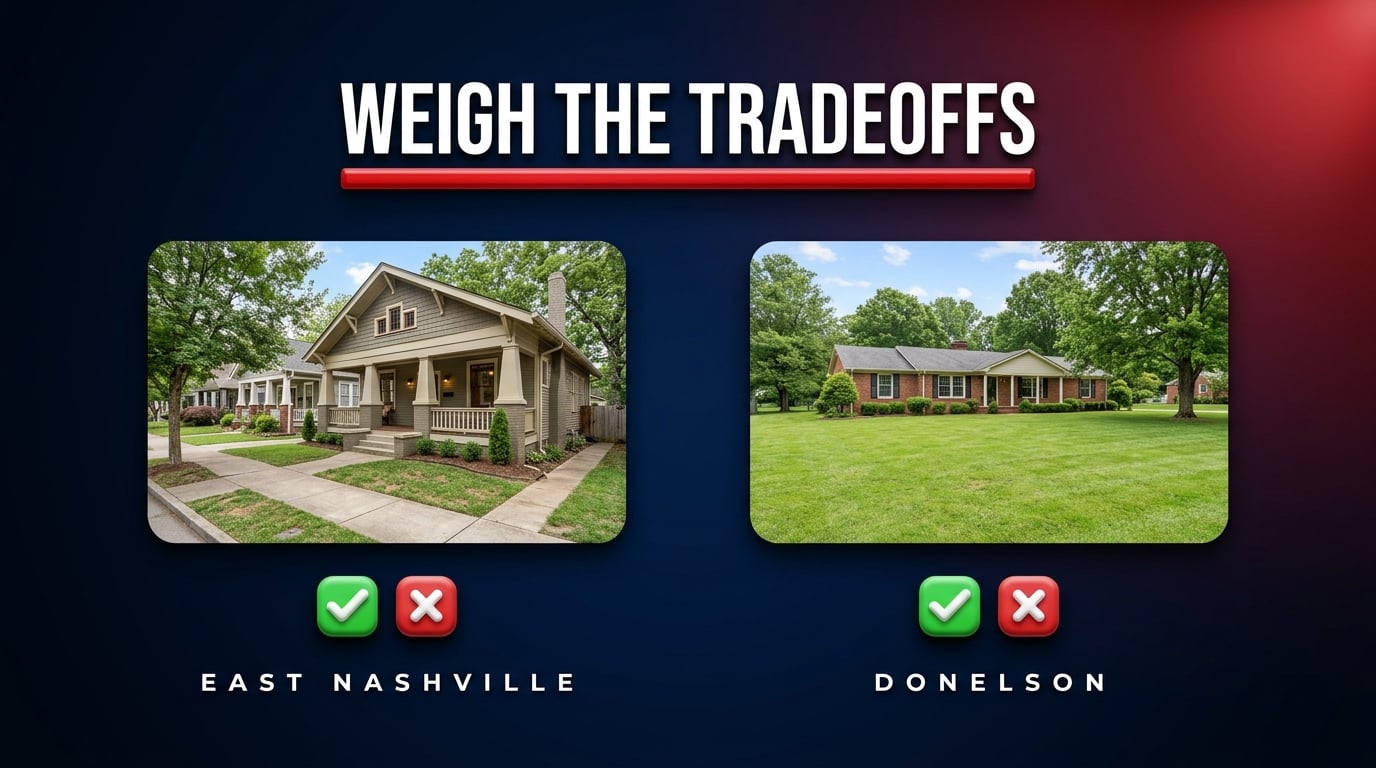
East Nashville's advantages include proximity to downtown, walkable pockets with restaurants and retail, access to Shelby Park and the greenway, and a large stock of Craftsman-era homes and newer infill. Its tradeoffs include higher prices, smaller lots, limited sub-$400,000 inventory in the historic core, flood considerations near the river, and the inspection needs of 100-year-old homes.
Donelson's advantages include lower prices, larger lots, quicker access to the airport, a commuter rail stop, and a large supply of detached brick homes and townhomes at accessible price points. Its tradeoffs include a more car-oriented layout, less walkable dining and retail, flight-path noise on some streets, and a smaller concentration of infill and new construction.
Current Inventory Examples
Listings change daily, so the examples below illustrate typical price points rather than live availability, and some may no longer be on the market.
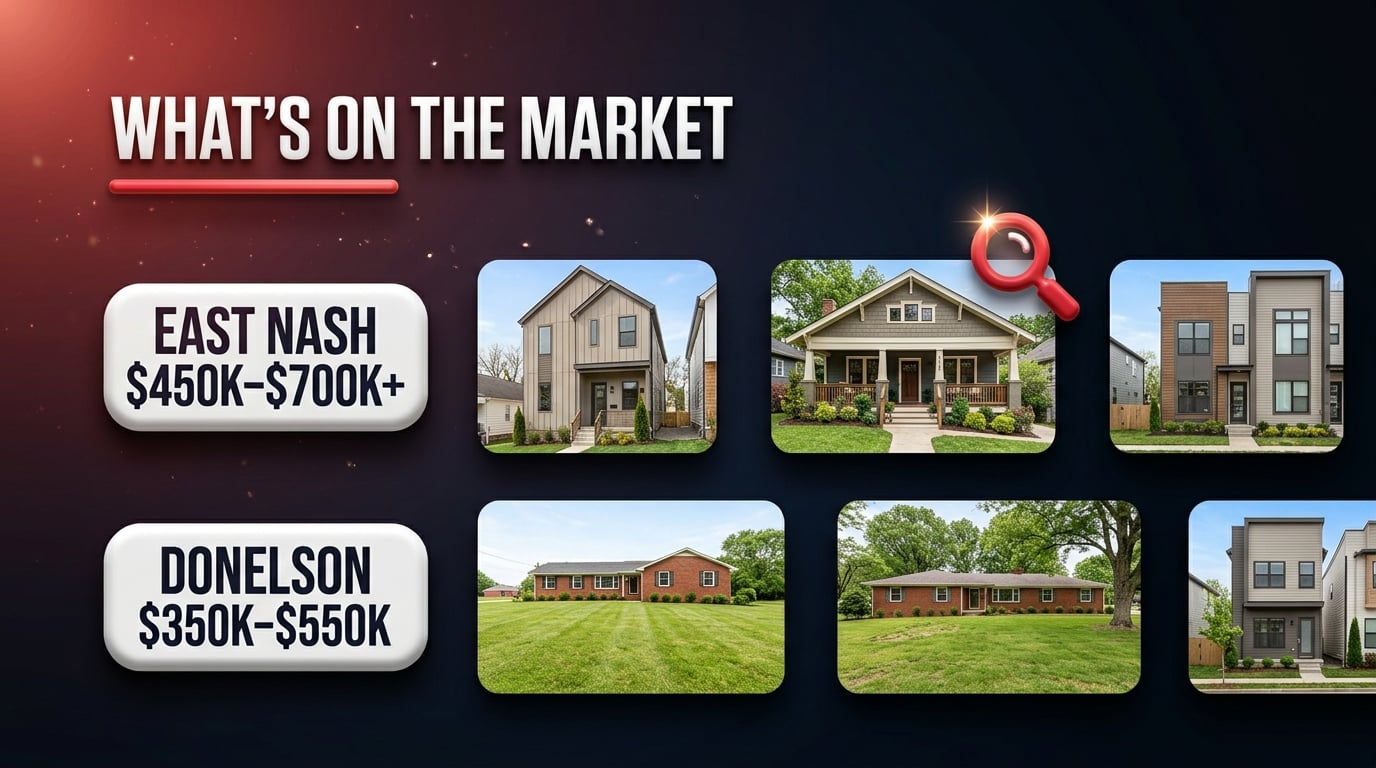
In East Nashville, spring 2026 listings included tall-skinny and planned-community homes in the East Hill area of 37216 priced from the mid-$400,000s to the mid-$500,000s, and larger infill and renovated homes in 37206 from the high-$600,000s upward. In Donelson, listings in the $350,000 to $550,000 range were mostly detached brick ranches on third-acre to half-acre lots, with townhomes and smaller homes below that range.
Questions Buyers Should Ask Before Choosing
- Do I want to walk to restaurants and parks, or is a larger yard more important to me?
- How much lot size and square footage do I need at my budget?
- How long a commute to downtown, and how short a drive to the airport, fits my routine?
- Am I comfortable with the inspection and maintenance needs of a home that is 70 to 100 years old?
- Would I consider infill or a townhome, and do I understand the HOA terms?
- Have I checked flood history and flight-path noise for the specific street?
- What is my total monthly cost, including taxes, insurance, and any HOA fees?
Elam's Local Insight
Buyers often compare East Nashville and Donelson because both are east-side, close-in options, but they tend to be surprised by how large the price gap is and by how different the housing feels once they tour. A home at the same price may be a smaller bungalow on a compact lot in East Nashville or a larger brick ranch on a bigger lot in Donelson. For older homes in either area, a thorough inspection, with extra attention to the crawl space, wiring, plumbing, and sewer line, tends to matter more than the cosmetic condition of the home.
Frequently Asked Questions
Is East Nashville more expensive than Donelson? Yes. RealTracs data showed an East Nashville median sale price of $567,000 for the quarter ending June 2026, compared with about $390,000 for the combined Donelson, Hermitage, and Old Hickory area and about $420,000 for ZIP code 37214 in early 2026. Prices within each area vary by neighborhood and home type.
Which area has larger lots, East Nashville or Donelson? Donelson generally does. Many Donelson homes sit on lots of a third of an acre to half an acre or more, while typical East Nashville core lots are around 50 by 150 feet, or roughly 0.17 acre, with smaller lots common in infill.
Which area is closer to downtown Nashville? East Nashville. Parts of it are 5 to 7 minutes from downtown, while Donelson is typically 10 to 15 minutes away. Donelson is closer to the airport, at roughly 5 to 8 minutes, compared with 12 to 18 minutes for most of East Nashville.
Is East Nashville in a flood zone? Some of it is. Streets near the Cumberland River have flood history, including the 2010 flood. Check the FEMA flood map, flood insurance requirements, and claims history for any specific address.
Do homes in East Nashville and Donelson have HOAs? Many older detached homes in both areas do not. HOA or condo fees are more likely with townhomes, condos, planned infill communities, and tall-skinny developments, so confirm the details for each property.
What should I inspect when buying an older home in either area? Common priorities include the crawl space and foundation, electrical wiring (knob-and-tube or aluminum in some eras), galvanized plumbing and the sewer line, roof and HVAC age, and lead paint or asbestos in pre-1978 homes. In East Nashville, also check flood history.
Let an Elam Nashville Agent Help You Compare These Areas
An Elam agent can walk you through recent sales in both areas, tour homes with you, and help you compare the full cost of each option. Contact ELAM Real Estate
Search current homes for sale: ElamRE.com/properties
Sources
- Zivak Realty Group, "Nashville Housing Market Update, August 2026" (RealTracs data, quarter ending June 2026): https://www.zivakrealtygroup.com/nashville-housing-market-update-august-2026/
- Nesting in Nashville, "East Nashville Neighborhood Guide 2026": https://nestinginnashville.com/guides/east-nashville-neighborhood-guide
- Nesting in Nashville, "Donelson Nashville Neighborhood Guide 2026": https://nestinginnashville.com/guides/donelson-neighborhood-guide
- Nashville Home Guru, "East Nashville Homes: Prices, Neighborhoods & Data (2026)": https://nashvillehome.guru/east-nashville-homes-sale-nashville-tn-37206-37216/
- Nashville Home Guru, "New Homes in East Nashville": https://nashvillehome.guru/east-nashville-new-construction-homes/
- Nashville Home Guru, "East Hill Homes for Sale": https://nashvillehome.guru/east-hill-homes-sale-nashville-tn-37216/
- Nashville Home Guru, "Homes for Sale 37206": https://nashvillehome.guru/37206-homes-sale-zip-code-home-search/
- Costigan Group, "East Nashville Real Estate: Historic Homes, New Builds & Block-by-Block Demand": https://thecostigangroup.com/blog/east-nashville-real-estate-guide-historic-homes-new-builds-and-block-by-block-demand
- Where to Live in Nashville, "Living in Inglewood" (Redfin data, February 2026): https://wheretoliveinnashville.com/blog/living-in-inglewood-nashville-honest-guide
- Redfin, "It's Now The Strongest Buyer's Market on Record, Driven by the Sun Belt" (August 2026): https://www.redfin.com/news/buyers-vs-sellers-august-2026/
- Metro Nashville Parks, Two Rivers Park: https://www.nashville.gov/departments/parks/parks/two-rivers-park
- Inspect and Test, "Nashville Home Inspection" guide: https://inspectandtest.net/guides/nashville-home-inspection/
- HomeLight, "Good Bones or Money Pit? How to Buy the Right Older Home for You": https://www.homelight.com/blog/buyer-common-problems-in-older-homes
- Redfin, "27 Common Hidden Issues in Older Homes": https://www.redfin.com/blog/?p=107173
Data verified October 30, 2026. Neighborhood-level figures reflect RealTracs and local market reporting from early to mid 2026 and may have changed; confirm current numbers before publishing or relying on specific figures.
Check out this article next